Industrial spaces are not predictable environments. Workers handle high-pressure systems, operate bulk tools, and move across fast-paced production zones. In such conditions, even a brief lapse in protection can lead to a serious harm. The use of industrial safety equipment reduces that risk. It creates a barrier between the hazard and the worker without obstructing productivity.
This post outlines the categories of a safety equipment used across industries. It also explains how businesses and their workers can together to create safe operational outcomes. The focus is on practical protection, clear accountability, and the right design thinking.
Safety equipment refers to all tools, wearables, controls and systems designed to protect a worker’s body, lungs, ears, eyes, or movement pathway from injury. These may include personal gear or machine-mounted devices. The type of equipment used depends on the site conditions, the job being done, and the risks that may arise.
In most industrial accidents, the cause is not absence of rules. It is absence of protection at the right time. Without the correct equipment in place, even trained operators can make mistakes. In sectors such as abrasive blasting or surface preparation, this is especially relevant.
High-velocity particle movement, pressurised air, sharp edges, and chemical coatings create constant exposure. For blasting machine manufacturers, this is a reality that must be addressed through design.
Every task involves unique risks. Equipment must match the exposure level without slowing down the workflow. The following categories cover the most commonly used forms of safety equipment:
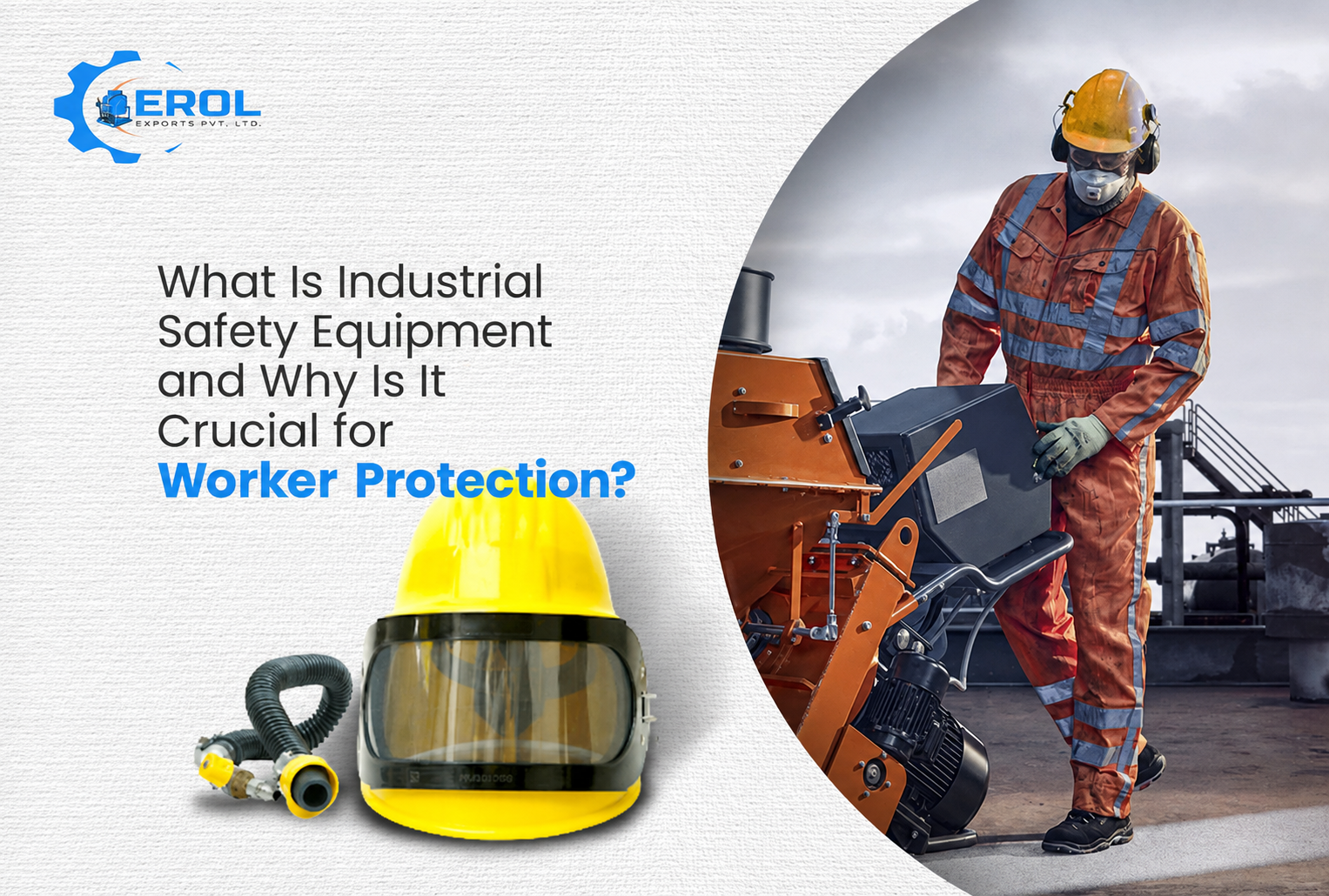
Helmets and goggles protect the upper body from falling items, sharp tools and airborne fragments. Industrial helmets must meet impact absorption standards. Eye gear must seal against dust, moisture and pressure shifts.
Dust masks and air-supplied respirators filter out fine particles or chemical fumes. These are essential in zones where abrasive blasting, surface coating or mixing of abrasive compounds takes place.
Earplugs and earmuffs reduce long-term hearing damage from compressors, vibrators or grinding machinery. These are required once decibel levels exceed defined thresholds.
Gloves designed for cut resistance, heat exposure or chemical defence allow better control during machine use. Safety boots with reinforced toes and slip protection are also part of the basic gear.
Safety harnesses, nets and railings reduce impact risk when tasks are performed at height. These must be anchored and checked before each use.
Emergency stop switches, control valves, nozzle locks and protective casings must be built into systems that run at high pressure or heat.
Abrasive blasting systems are an example of how equipment must integrate protection from the design stage. At Erol Exports, such integration is visible across their pressure vessels, remote control valves, airflow regulators and operator accessories. Their role as blasting machine manufacturers extends into anticipating risk before it occurs.
In blasting environments, the safety equipment must not be separate from the machine. It must be part of the original configuration. That includes everything from helmet airflow channels to deadman handle placements. The goal is not only to respond quickly during a hazard but to reduce its likelihood from the start.
Erol Exports manufactures certified blast pots and accessories that meet global safety codes. Their CE and ASME marked systems are pressure tested, structurally reinforced, and operator friendly. This matters because many incidents in surface preparation involve loss of control due to backflow, valve leaks or impact recoil. These risks cannot be managed with personal gear alone.
For blasting machine manufacturers, the product is not just the machine. It is the combined safety ecosystem. It includes airflow systems, moisture separators, pressure gauges, grit hoses, and nozzles that reduce vibration. Erol’s approach reflects that understanding.
Having equipment in place is only one part of protection. Regular inspection, cleaning, and replacement are just as important. Dust-clogged filters, worn-out harnesses or leaky couplings can fail in critical moments. Safety equipment must be reviewed on schedule, not after an accident.
Industries must build this habit across departments. Visual checks before every shift, scheduled servicing of air compressors, and calibration of emergency shutoffs help maintain continuity. Leading blasting equipment manufacturers embed service-friendly system design into their products.
Erol Exports is an ISO 14001 45001 certified by TUV NORD Germany. The company focuses on standard IMS policy and offers detailed product guidance to ensure that clients gain clarity and full understanding of installation and after-use maintenance of their machines. The company’s commitment to operator safety is seen not just in product design but also in their end-to-end process support.
Workplace safety is not only about compliance. It is a practical business necessity. Injuries create downtime. Downtime creates delays. Delays cost money. Equipment that supports safety keeps the system moving. It protects lives and protects delivery schedules.
For industrial buyers, it is not enough to select the right type of safety equipment. They must also evaluate the manufacturer. A supplier must have a track record in international compliance, a clear parts inventory, and a support model that does not end after purchase. Erol Exports checks each of these boxes. Their machines are used in global operations where safety standards are strictly monitored.
Safety cannot be added after the machine is installed. It must begin at the design table. Every accessory, every panel and every control point must consider the person who is operating it. Industrial safety equipment is foundation of the manufacturing lifecycle. It enables people to work without risk of damage or fear of loss, and systems to run without interruption.
Workers usually rely on items like helmets, gloves, safety shoes, and eye protection to stay safe during physically demanding or hazardous tasks.
Certified equipment gives workers the right level of protection because it is tested for specific dangers found in industrial and construction environments.
It should be checked regularly, especially after tough use. If anything looks worn or broken, it must be replaced without delay.