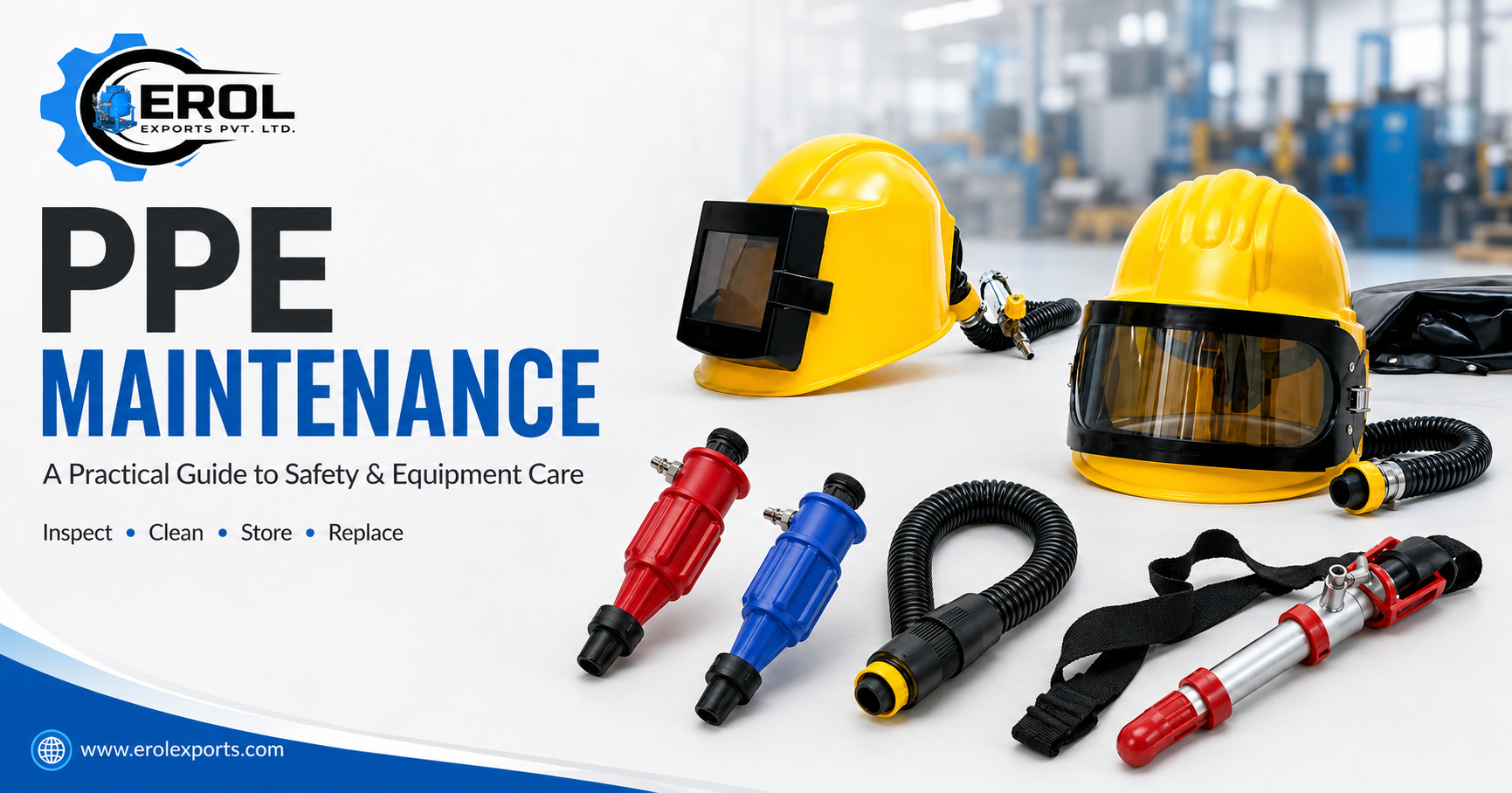
Personal protective equipment (PPE) helps protect workers from hazards in abrasive blasting, manufacturing, construction, and other industrial jobs. Respirators, goggles, gloves, and helmets each serve a specific protective purpose. However, their effectiveness depends on correct selection, use, cleaning, and storage. Regular maintenance keeps PPE in serviceable condition and helps identify when replacement is necessary. This online guide explains why PPE care matters, what affects equipment durability, and how to establish a practical maintenance routine.
Providing protective equipment is only one part of workplace safety. Employers and operators also need to check that it remains suitable for the task and in good working condition. Regular PPE maintenance offers several benefits:
Protective equipment does not have one universal replacement interval. Its condition depends on the product, working environment, and level of use.
The materials used influence resistance to abrasion, impact, chemicals, and other stresses. Equipment should be selected for the specific hazards involved, rather than judged on durability alone.
Heat, sunlight, moisture, chemicals, and abrasive particles can accelerate deterioration. Inspection routines should account for the conditions in which the equipment is used.
Equipment used throughout every shift may experience more wear than items used occasionally. Tracking usage helps teams plan inspections and maintain adequate replacement stock.
Each type of protective equipment has its own maintenance requirements. Always follow the instructions supplied with the specific safety equipment product.
Inspect the shell, suspension, straps, and fittings for cracks, deformation, or deterioration. Store headgear away from excessive heat and direct sunlight.
Clean reusable earplugs as directed and discard single-use products after use. Check earmuff cushions, headbands, and ear cups for damage that could affect fit or sealing.
Use an approved cleaning method to remove dirt without damaging lenses or coatings. Replace components that are cracked, damaged, or scratched enough to impair visibility. Store eye protection where lenses will not rub against rough surfaces.
Look for cuts, punctures, thinning, and damaged seams. Clean reusable gloves only when permitted by the manufacturer, using a method suitable for their material and contamination. Do not wash or reuse disposable gloves.
Inspect relevant components, including facepieces, straps, valves, breathing tubes, and connections. Clean and disinfect reusable parts according to the manufacturer’s instructions. Replace filters and cartridges under the applicable replacement schedule; appearance alone does not establish that they remain effective.
Operators should check their equipment before each use. Additional inspections should reflect the product requirements, working conditions, and frequency of use.
Remove contamination with the recommended cleaning products and procedures. Unsuitable solvents, abrasive cleaners, or excessive heat may damage protective materials.
Clearly identify and separate damaged PPE to prevent accidental reuse. Repairs should be performed only where the manufacturer permits them, using approved parts and procedures. Otherwise, replace the item.
Allow cleaned equipment to dry using the specified method. Avoid direct heat unless explicitly permitted, as it may distort or weaken components.
Record inspections, defects, authorised repairs, and replacements where appropriate. These records help supervisors identify recurring problems and plan maintenance.
Keep PPE in a clean, dry location protected from contamination, sunlight, chemicals, and physical damage. Store items in a way that preserves their shape and protective components.
A clear process makes equipment care easier to maintain across shifts.
Effective PPE maintenance combines regular inspection, appropriate cleaning, protected storage, and timely replacement. These practices help keep equipment ready for use, but they must work alongside suitable equipment selection, operator training, and workplace hazard controls.
Planning to stock PPE for your blasting operations? Contact Erol Exports to discuss your surface preparation and safety equipment requirements.