Cabinet blasting machines provide a controlled and efficient method of cleaning, finishing and preparing industrial components. Their enclosed chamber construction keeps the blasting process contained while allowing abrasive media to be collected and reused where appropriate. These machines are suitable for removing rust, mill scale, paint, oxidation and other surface contaminants. They can also be used for deburring, surface texturing, cosmetic finishing and preparing components for painting, coating or further processing. However, not every blasting cabinet is suitable for every application. Component dimensions, production volume, material type, surface condition, abrasive media and available compressed-air capacity all influence equipment selection.
Understanding these factors can help businesses choose a professional cabinet blasting machine that delivers consistent surface quality, controlled abrasive consumption and reliable long-term performance.
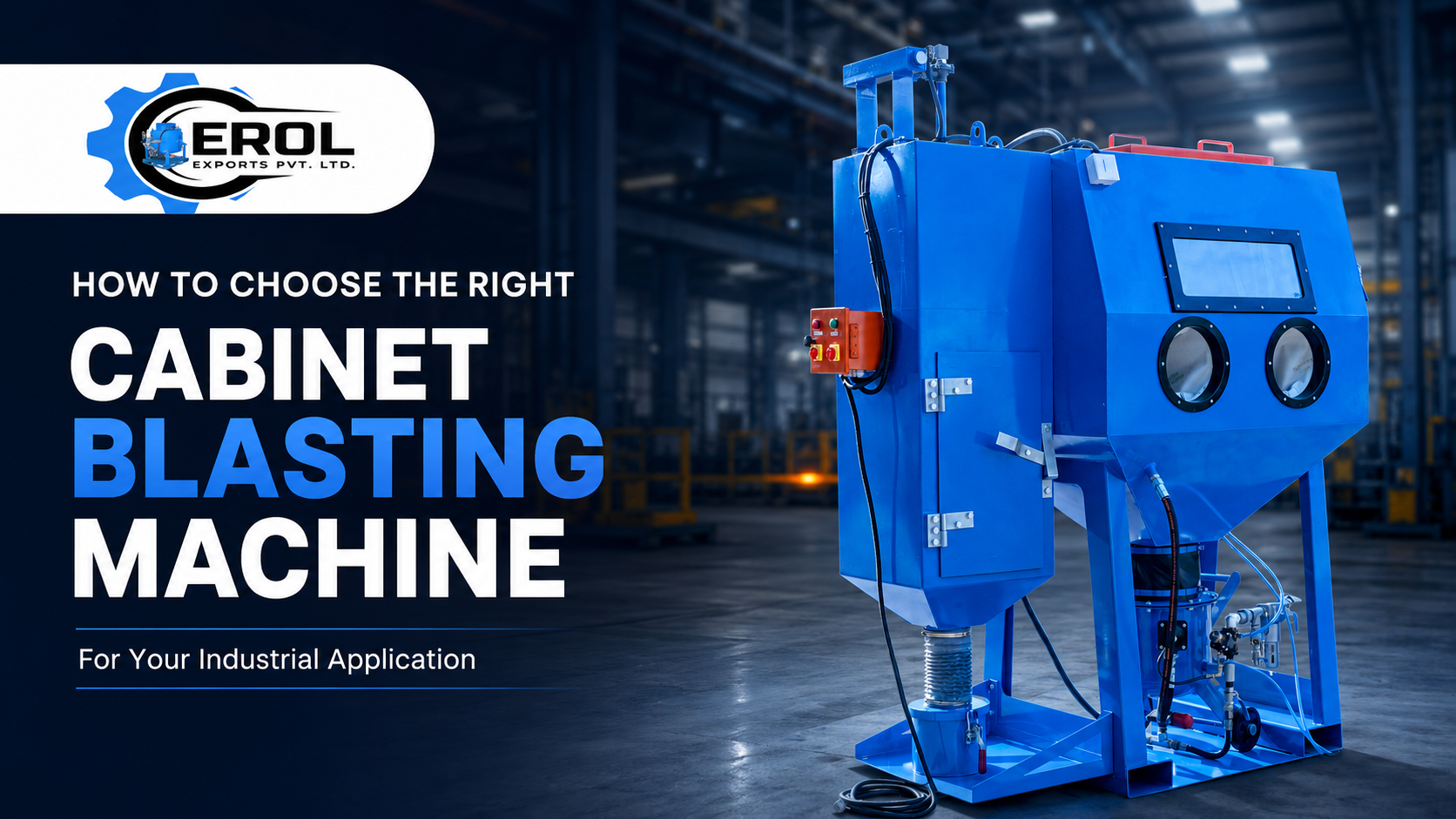
A cabinet blasting machine is an enclosed system in which abrasive media is propelled against a component using compressed air. The operator remains outside the working enclosure and controls the blasting process through built-in gloves while viewing the component through an inspection window. During blasting, the cabinet contains the dust and garnet abrasive generated by the process. Used abrasive falls into the lower hopper, where reusable media may be recovered and returned to the blasting cycle. Dust, broken abrasive and removed contaminants are extracted or separated from the usable media. The enclosed design makes cabinet blasting suitable for workshops and manufacturing facilities that require repeatable surface preparation without allowing abrasive media to spread throughout the surrounding work area.
Cabinet blasting systems can be used for a wide range of industrial cleaning and surface finishing operations, including:
They are widely used in automotive workshops, fabrication units, foundries, maintenance departments, aerospace facilities, tool rooms, agricultural equipment workshops and general engineering industries.
The internal dimensions of the cabinet should be selected according to the largest component that will be processed. The workpiece must fit comfortably inside the enclosure while leaving enough space for the operator to move the blast gun and reach every required surface. A cabinet that only just accommodates the component may restrict gun movement and make it difficult to blast the part uniformly. Before selecting a machine, consider:
Choosing a cabinet that provides adequate working clearance can improve operator comfort and reduce the time required to process each component.
Component weight directly affects the cabinet’s working platform and loading arrangement. Small parts may be loaded manually, whereas heavier components may require a trolley, turntable, roller conveyor or crane-assisted loading system. For heavy or irregular components, a rotating table can allow the operator to reach multiple surfaces without repeatedly lifting or repositioning the workpiece. Depending on the application, useful handling features may include:
The cabinet manufacturer should be informed about the maximum component weight so that the supporting structure and material-handling system can be engineered accordingly.
Cabinet blasting machines generally operate using either a suction blasting system or a pressure blasting system. The correct choice depends on the required cleaning intensity, production volume and compressed-air availability.
A pressure blasting cabinet uses a pressurised vessel to propel abrasive media through the blast hose and nozzle. It produces a stronger and more concentrated abrasive stream. Pressure cabinets are generally preferred for:
Pressure blasting can significantly improve cleaning speed, but it generally requires a larger compressor and a properly sized abrasive recovery and dust collection system.
The abrasive media determines how aggressively the surface is treated and what finish is produced. Selecting unsuitable media can damage the component, create an incorrect profile or introduce unwanted contamination. Common cabinet blasting media include:
The abrasive should be selected according to:
A professional cabinet blasting machine should make efficient use of abrasive media. After striking the component, the media falls into the hopper along with rust, coating particles, dust and other debris. An effective recovery arrangement separates reusable abrasive from contaminants before returning it to the blasting process. This helps maintain consistent media quality and surface-finishing performance. A suitable system may include:
Poor separation can allow excessive dust and broken media to remain in circulation. This may reduce visibility, increase nozzle wear and produce an inconsistent surface finish.
Dust extraction is essential for clear visibility and reliable cabinet operation. As contaminants are removed from the component, fine particles become suspended inside the enclosure. Without effective extraction, the operator may struggle to see the workpiece. A properly selected dust collector helps:
The dust collector must be sized according to the cabinet volume, abrasive media and amount of dust expected from the application.
Cabinet sealing is equally important. Doors, inspection windows, glove ports and service openings should be properly sealed to control abrasive and dust leakage.
Blasting performance depends on a stable supply of clean and dry compressed air. The required airflow varies according to the nozzle diameter, operating pressure and type of blasting system. Before buying a blasting cabinet, verify:
An undersized compressor may cause pressure fluctuations, slow cleaning and inconsistent results. Moisture in compressed air can also cause abrasive media to clog, particularly in humid operating conditions. Air preparation equipment such as an after cooler, air receiver, moisture separator or air preparation unit may be required to maintain stable abrasive flow.
The operator must be able to clearly observe and control the blasting process. Good cabinet ergonomics can reduce fatigue and improve production consistency during repetitive operations. Important features include:
Replaceable protective film prevents the main inspection glass from being damaged by abrasive rebound. It can be changed as visibility deteriorates, reducing maintenance costs and downtime.
A cabinet is continuously exposed to abrasive particles travelling at high velocity. Its construction should therefore be strong enough for the intended media and frequency of operation. Buyers should examine:
The areas directly exposed to abrasive rebound may require additional protection. Proper wear-resistant lining can extend cabinet life and reduce premature damage.
A cabinet used occasionally for maintenance does not require the same configuration as a machine operating continuously in a production facility. Consider the following before finalising the system:
For low-volume work, a manually operated suction cabinet may be sufficient. Higher production requirements may justify a pressure blasting system, turntable, specialised fixture, larger dust collector or more advanced abrasive recovery arrangement.
When matched correctly to the application, a cabinet blasting system can provide several operational benefits:
The objective is not simply to purchase the largest or most powerful machine. The ideal cabinet should balance cleaning performance, air consumption, abrasive usage, operator comfort and production requirements.
Established in 1996, Erol Exports Private Limited is an OEM and global supplier of abrasive blasting machines, equipment and accessories for industrial surface preparation. Erol Exports manufactures cabinet blasting systems for component cleaning, coating removal, deburring and surface finishing applications.
Cabinet configurations can be developed according to the customer’s component dimensions, production volume, abrasive media and required surface result. Customers can also source supporting equipment from Erol Exports, including:
This integrated approach allows the blasting cabinet and its supporting equipment to be selected as part of one coordinated surface preparation system.
Choosing the right cabinet blasting machine requires a detailed assessment of the components, abrasive media, production volume and available utilities. Cabinet dimensions and loading capacity must accommodate the workpiece, while the blasting method should provide the required cleaning intensity and surface finish. Compressed-air quality, abrasive recovery, dust extraction, visibility and operator ergonomics must also be considered. When these factors are properly evaluated, a cabinet blasting system can deliver reliable performance, efficient media usage and consistent surface preparation.
With 30 years of engineering and manufacturing experience, Erol Exports provides standard and custom-engineered cabinet blasting solutions for demanding industrial applications. If you are looking for a cabinet blasting machine tailored to your components and production requirements, contact us today for technical consultation and a customised quotation.