Purchasing abrasive blasting equipment is a significant capital investment. Capitalizing on that investment over time depends on consistent surface preparation quality, operational efficiency, and a structured maintenance strategy throughout the machine’s service life. For industrial operators and contractors, maintenance must go beyond emergency repairs after a breakdown. An optimal service strategy protects performance, ensures worker safety, and keeps production schedules predictable. Partnering with your Original Equipment Manufacturer (OEM) yields a distinct advantage in achieving these outcomes.
1. Comprehensive System Expertise
Abrasive blasting setups function as integrated systems where air buffer vessels, media metering, blasting spares, and worker protection equipment must remain synchronized. Enclosed systems also require precise media recovery and dust extraction. OEMs bring deep, design-level knowledge to diagnostic work, allowing technicians to identify root causes behind failures rather than merely swapping broken components.
2. Baseline Performance Tracking
Proactive maintenance relies on knowing standard operating benchmarks. Documenting metrics like blasting pressure, media consumption rates, processing speed, and wear-part replacement intervals helps transition maintenance logs from vague observations (e.g., “the machine feels slower”) to actionable technical data. This clarity helps isolate equipment faults from variations in the raw material or workload.
3. Precise Component Compatibility
Replacing parts based purely on visual match can lead to premature failure or safety hazards. Component selection requires verifying pressure ratings, material composition, exact dimensions, and abrasion resistance against the equipment’s original serial number and model revision. OEM sourcing ensures components meet exact engineering standards.
4. Usage-Based Service Schedules
Maintenance schedules should reflect actual operational load rather than arbitrary calendar dates. Combining OEM guidelines with real-world operating hours, abrasive aggressiveness, and working environment severity yields a reliable, preventive maintenance cadence.
While qualified independent technicians can handle general upkeep, OEM involvement is critical for complex diagnostics, verified spare parts, and system modifications. Assess prospective service providers using the following criteria:
Looking solely at the initial repair invoice provides a misleading picture of total expenditure. A realistic evaluation weighs service costs against total system uptime, repeat failure rates, media consumption, and surface quality outcomes. Investing in higher-tier, specialized maintenance frequently yields lower total ownership costs by preventing unexpected downtime.
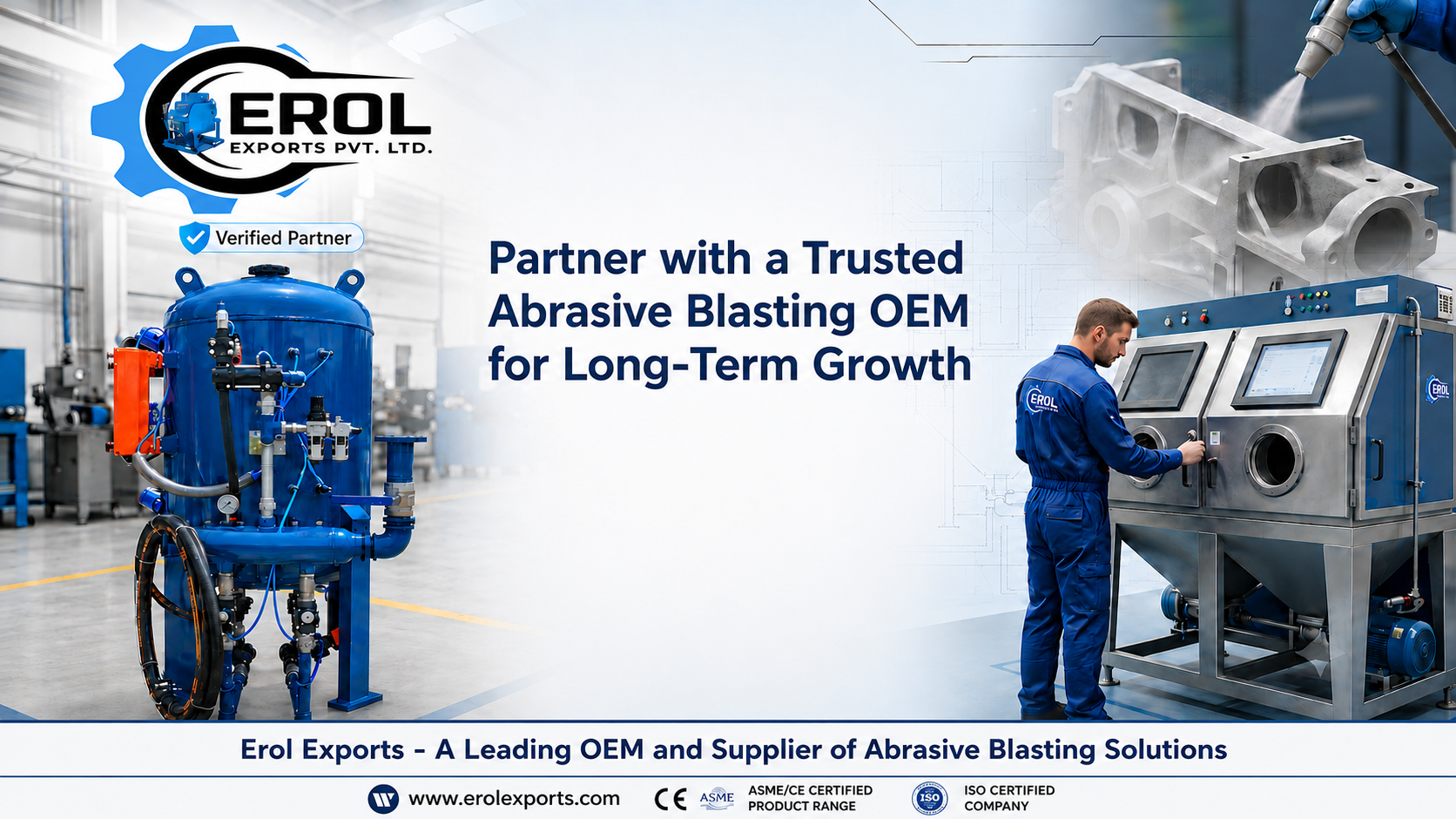
Founded in 1996, Erol Exports is an ISO 9001, 14001, 45001 certified by TUV NORD Germany. The company manufactures industrial surface preparation machinery, including blast pots, twin-chamber units, bulk blasters, blast cabinets, air-preparation units, and media-recovery systems.
When acquiring new machinery or servicing existing setups, engaging directly with the Erol Exports as your trusted blasting machine manufacturer ensures clear access to technical manuals, recommended spares lists, warranty coverage, and regional support options. Providing your machine’s serial number, current application, and maintenance logs gives the OEM the context needed to optimize your system’s output.
Maximizing the ROI of surface preparation machinery requires informed operational decisions, precise replacement parts, and structured maintenance. Treat your OEM as a long-term technical partner to biuld reliability directly into your asset management strategy from day one.